
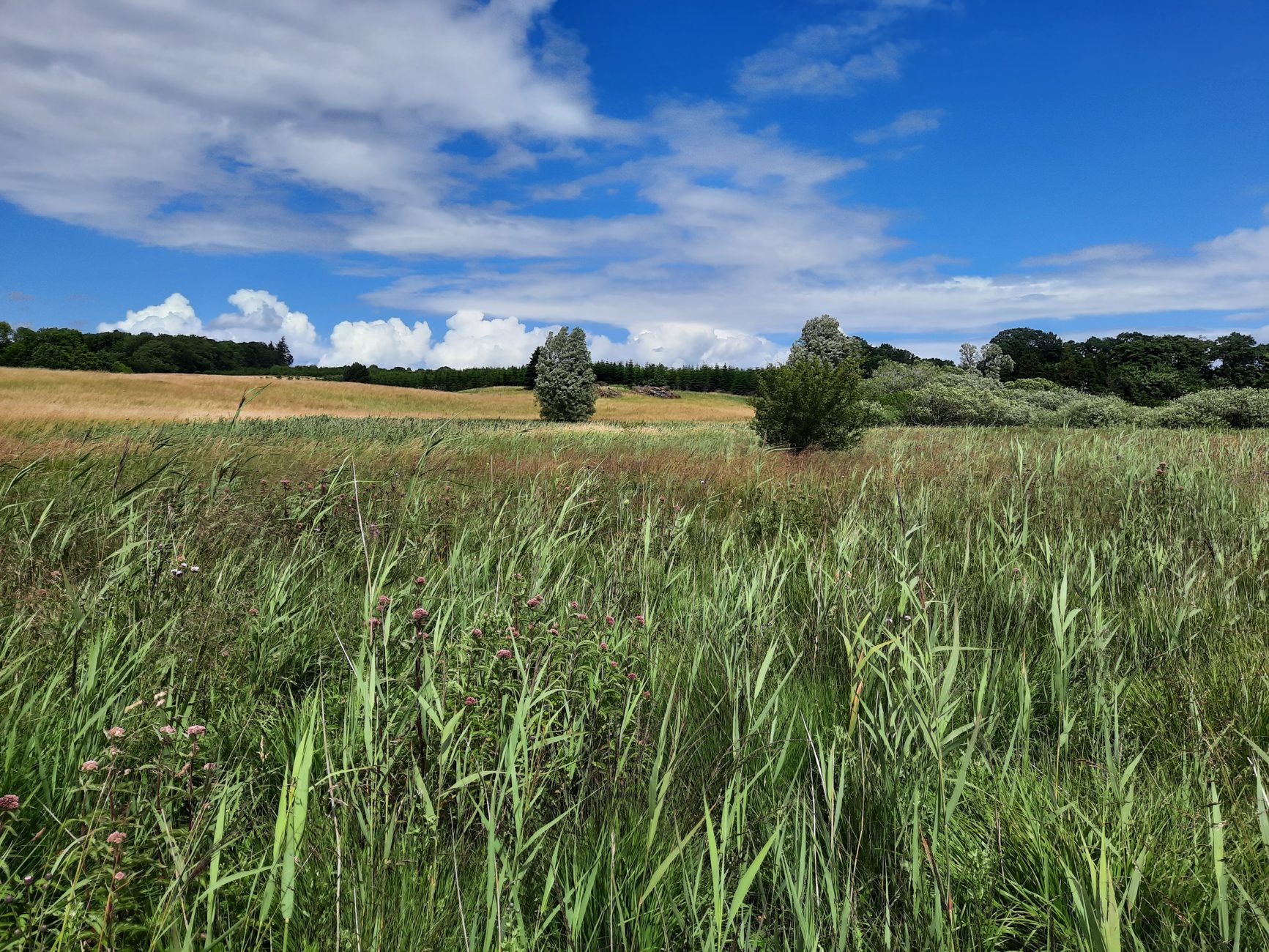
Changing landscapes
Nature restoration
Changes to hydrology, management or other forms of land use can produce ecological responses on very different timescales. Some changes become visible within a few seasons; others take decades to document.
Potential contributions
FutureGrounds can advise on and develop monitoring that captures both initial conditions and subsequent changes in biodiversity, vegetation, habitat structure and ecological processes. This may include establishing baselines, permanent sampling plots, vegetation mapping, drone-based mapping and integration of existing data. The focus is not only on whether a project reaches a predefined state, but also on its direction of development, variation and signs that key processes are becoming re-established.
Relevant experience
Experience in long-term monitoring of vegetation and biodiversity, and in analysing change along ecological gradients through repeated observations. The work spans baseline development and monitoring design through to interpreting changes in species composition, vegetation and habitat structure in changing landscapes. The emphasis is on robust designs that can be repeated over time and adapted as ecosystems develop in new directions.

- recovery
- trajectory
- baseline
- succession
- ecological gradients